
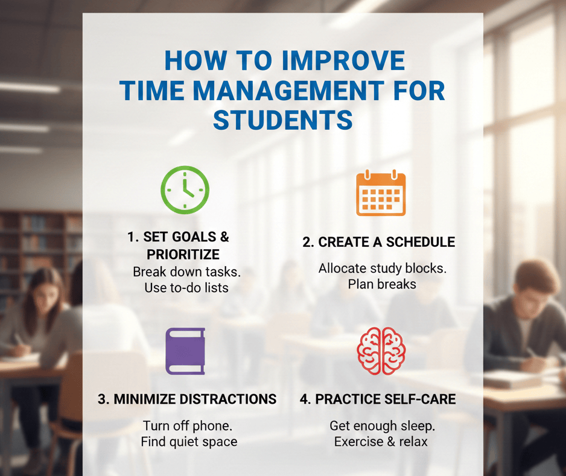

Time management is one of the most important skills every student must master. Between studying, attending classes, socializing, and maintaining a healthy lifestyle, managing your time efficiently can sometimes feel overwhelming. In this guide, we will discuss how to improve time management, providing you with actionable tips, strategies, and tools to take control of your time and boost productivity.
1. Why Is Time Management Crucial for Students?
Effective time management allows students to prioritize tasks, meet deadlines, and balance academic and personal life. It helps reduce stress and anxiety, ensuring that you don’t miss important deadlines or feel unprepared for exams. In short, time management can be the key to academic success and personal well-being.
2. How Can Time Management Be Improved?
Improving your time management skills doesn’t happen overnight. It requires consistency, self-discipline, and an understanding of how you use your time. Here are some practical steps you can follow to improve time management:
- Create a Calendar or Planner: Make a habit of scheduling important tasks like study sessions, deadlines, and extracurricular activities. Having a clear calendar allows you to see where your time is going and plan effectively.
- Prioritize Your Tasks: Not all tasks are of equal importance. Learn to prioritize based on deadlines and task complexity. This ensures that you’re always working on what matters most.
- Set Clear Goals: Set both short-term and long-term goals for your academic journey. Break large tasks into smaller, manageable steps and stay focused on completing one task at a time.
- Avoid Procrastination: Procrastination is the enemy of good time management. Learn to overcome it by taking small steps, starting tasks early, and breaking them down into simpler parts.
3. Time Management Tips for Students
Now, let’s dive into Time Management Tips for Students that can help you stay organized and make the most out of your day:
- Use Digital Tools: Apps like Google Calendar, Asana, or Trello can help you stay on top of your tasks. Set reminders and alarms for study sessions, exams, and important activities.
- Find Your Peak Productivity Time: Each person has a time of day when they are most productive. Some students work better in the mornings, while others are night owls. Find when you work best and schedule your study sessions around that time.
- Avoid Multitasking: While it might feel like you’re accomplishing more, multitasking can actually reduce productivity. Focus on one task at a time for better results.
- Take Breaks: Overworking yourself can lead to burnout. Follow the Pomodoro technique, where you work for 25 minutes and then take a 5-minute break. This can keep you refreshed and productive.
- Stay Organized: Keep your workspace clean and free from distractions. An organized study area helps you stay focused and mentally prepared for tasks.
4. What Are 5 Keys to Time Management?
The following 5 keys to time management can help you streamline your schedule and boost your efficiency:
- Planning: Start each day with a clear plan. List your tasks and prioritize them based on urgency.
- Delegation: If you’re working on group projects, delegate tasks to others to ensure everyone is contributing to the workload.
- Setting Boundaries: Set clear boundaries with friends and family. Let them know when you need time to focus and when you’re free to socialize.
- Consistency: Stick to your schedule and make time management a daily habit. The more consistent you are, the easier it becomes.
- Self-Care: Ensure that you’re getting enough sleep, eating healthy, and exercising regularly. Physical and mental well-being directly impacts your ability to manage time effectively.
5. How to Improve Management Skills?
Improving management skills goes hand-in-hand with improving time management. Being able to manage multiple tasks, deadlines, and responsibilities effectively is key to personal and academic success. To improve your management skills, consider these approaches:
- Delegate Tasks: Learn how to delegate tasks to others, especially in group projects. This allows you to focus on the more critical elements of the task.
- Learn to Prioritize: Focus on what needs your attention first and save less urgent tasks for later. This can be learned through practice and trial-and-error.
- Develop a Routine: Establish a daily routine that includes time for study, rest, and social activities. A set routine helps you manage your time more effectively.
6. Set Up Reminders for Important Tasks
Reminders are a great way to stay on top of deadlines and keep track of assignments. Whether it’s a phone alarm, a written reminder in your planner, or an automated notification on your calendar, having a system that reminds you of upcoming tasks can help prevent things from slipping through the cracks.
7. Be Realistic About Your Goals
One of the key aspects of how to improve time management is setting realistic goals. Don’t overburden yourself with too many commitments. Instead, set achievable goals that align with your available time and energy. If you’re juggling multiple tasks, prioritize the most critical ones and break them down into smaller, manageable pieces.
8. Stay Flexible and Adapt
Time management isn’t about rigidly sticking to a schedule. It’s about adaptability. Sometimes, unexpected events or tasks may arise that require your attention. Stay flexible and adjust your plans accordingly without feeling overwhelmed.
9. Conclusion: Mastering Time Management
Mastering how to improve time management is a continuous process that requires practice, patience, and persistence. By using the tips, strategies, and tools mentioned above, students can take control of their time, reduce stress, and ultimately achieve both academic and personal success.
Take Control of Your Time Today
If you’re looking for more Time Management Tips for Students or need help with personalizing your study routine, don’t hesitate to get in touch. Master time management and make it work for you—one step at a time!
Visit Pakistan Network for more resources and guidance to stay organized and efficient in your studies.