

The Middle East is once again standing at a crossroads where a single miscalculation could shake the entire world. On one side, Washington and Tehran are edging toward what could be a landmark nuclear agreement. On the other hand, Israeli military operations in Lebanon continue to threaten the fragile diplomatic progress being made behind closed doors.
Trump’s Bold Claim: “Two or Three Days”
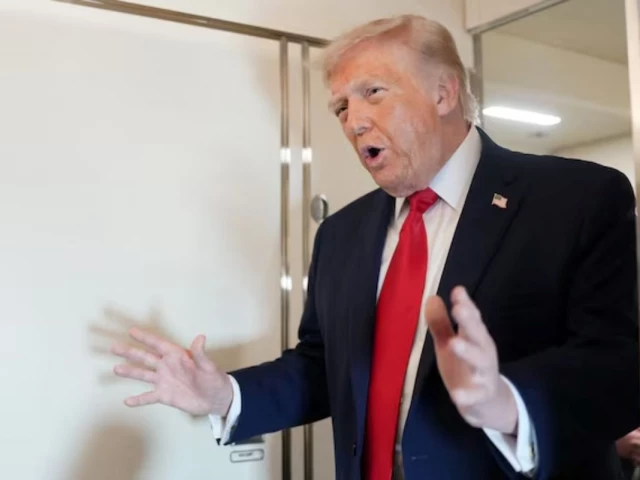
US President Donald Trump has declared that negotiations with Iran have entered their final phase, suggesting a deal could be formally signed within two to three days. According to Trump, the Strait of Hormuz — which Iran has effectively been blockading — would reopen immediately upon signing.
This announcement came shortly after both Iran and Israel agreed to halt attacks on each other, at least temporarily. Iran, however, made its position clear: if Israeli military strikes in Lebanon continue, Tehran reserves the right to resume hostilities.
Why the Strait of Hormuz Matters to Every Country on Earth
Before the conflict, roughly a fifth of the world’s crude oil and liquefied natural gas passed through the Strait of Hormuz daily. Iran’s grip on this narrow waterway has sent shockwaves through global energy markets, causing oil prices to spike erratically and adding pressure on economies already struggling with inflation.
Trump has repeatedly emphasized that a successful deal would cause oil prices to “come tumbling down” — a promise that resonates well beyond the Middle East, touching the wallets of ordinary people from Karachi to Kansas City.
Lebanon: The Knot That Could Unravel Everything
The thorniest obstacle in these negotiations isn’t uranium enrichment — it’s Lebanon. Iran has consistently argued that any peace agreement with the United States must be linked to a ceasefire in Lebanon, where Israel has been conducting military operations against Hezbollah since March.
Israel, for its part, insists Lebanon is a separate front and continues its campaign there. The human cost is mounting, with civilians killed, displacement orders issued to entire cities, and even civil defense rescue teams coming under drone fire.
This disconnect between what Iran demands and what Israel is willing to accept could collapse the entire negotiating framework at any moment.
Trump vs. Netanyahu: How Deep Does the Rift Go?
Reports have emerged of a tense exchange between Trump and Israeli Prime Minister Benjamin Netanyahu after Israel struck Iranian targets in retaliation for missile attacks. Trump reportedly warned Netanyahu to proceed carefully, reminding him that the US was very close to finalizing a “powerful deal.”
In what may be one of the more candid diplomatic warnings in recent memory, Trump told Netanyahu that if he returned to all-out war with Iran, he might find himself “on his own very soon.”
Israel’s ambassador to the US pushed back strongly on this narrative, describing the relationship between the two leaders as a deep, decades-long friendship — though even he acknowledged that conversations can sometimes get “heated.”
What Each Side Wants
The gap between Iranian demands and American red lines tells the real story of how difficult this deal actually is.
Iran’s demands: Full removal of international sanctions, return of billions in frozen assets, and formal recognition of its control over the Strait of Hormuz.
America’s non-negotiable condition: Iran must be permanently and verifiably prevented from developing nuclear weapons — full stop.
These positions have been at odds for years. What’s changed is the level of military and economic pain both sides are now experiencing, which may finally be forcing genuine compromise.
The Wider Picture: Houthis, Hezbollah, and the Axis of Resistance
The conflict has never been a simple two-party standoff. Yemen’s Houthi movement has pledged to disrupt Israeli shipping in the Red Sea and threatened to impose conditions on the Bab el-Mandeb Strait similar to what Iran has done in the Strait of Hormuz. This would effectively threaten two of the world’s most critical maritime chokepoints simultaneously.
Iran’s Quds Force has also signaled that any escalation in Gaza or Lebanon would only deepen the resolve of its regional allies and potentially open new military fronts. The UN Secretary-General has called for maximum restraint from all parties, a plea that so far has been honored more in words than in action.
What Happens Next?
All eyes are now on the final text of whatever draft agreement is being circulated between Washington and Tehran. If a deal is struck, the consequences would be far-reaching: oil markets would stabilize, the Strait of Hormuz would reopen, and the region could begin a cautious exhale after months of escalating tension.
But the window is narrow and the variables are many. Lebanon remains a live wire. Hardliners on both sides are watching closely. And history has shown that Middle East diplomacy has a habit of collapsing at the very moment success seems within reach.
Whether the next few days bring a historic agreement or another round of escalation, the world cannot afford to look away.