
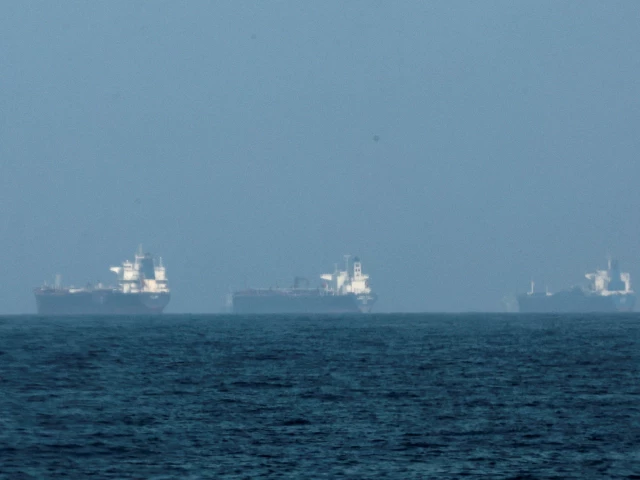

Tensions in the Middle East have intensified as Iran signalled that oil shipments from the region could be halted if military attacks continue. The situation has raised global concerns because the region is responsible for a significant portion of the world’s oil supply.
At the same time, former US President Donald Trump has warned that the United States could respond with stronger military action if Iran attempts to block oil transportation through one of the world’s most important shipping routes.
The developments have created uncertainty in global energy markets and raised fears about how the conflict could affect international oil prices and economic stability.
Iran Signals Possible Oil Export Blockade
Iran’s Revolutionary Guards have stated that if attacks from the United States and Israel continue, oil shipments from the Middle East may be blocked. According to officials, Iran is prepared to stop oil exports from the region as part of its response to ongoing military strikes.
The statement suggests that Iran could take action in the Strait of Hormuz, a narrow waterway through which a large share of the world’s oil supply passes.
Blocking this route would have serious consequences for global energy markets because many oil-producing countries depend on this shipping lane to export crude oil.
Iran has emphasised that it will determine how the conflict ends and has warned that continued attacks could lead to stronger countermeasures.
Trump Warns of Strong Military Response
In response to Iran’s warning, Donald Trump said the United States would respond with significant force if Tehran attempted to disrupt oil shipments.
Trump stated that any attempt to stop the flow of oil through the Strait of Hormuz would trigger a much stronger response from the United States.
He suggested that the US military had already caused major damage to Iran’s military infrastructure and claimed the conflict was progressing faster than initially expected.
According to Trump, Iran’s military capabilities had been severely weakened due to recent attacks.
However, Iranian officials have rejected this claim and say they remain capable of continuing the conflict.
Importance of the Strait of Hormuz
The Strait of Hormuz is considered one of the most important shipping routes in the world for oil transportation. Roughly one-fifth of global oil supply passes through this narrow waterway connecting the Persian Gulf to international markets.
Because of its strategic importance, any disruption in this area can quickly affect global energy prices and supply chains.
Oil tankers from major producers such as Saudi Arabia, the United Arab Emirates, Kuwait, and Iraq travel through the strait to deliver crude oil to markets in Asia, Europe, and other regions.
If the route becomes blocked or unsafe for shipping, energy supplies around the world could be disrupted.
Impact on Global Oil Markets
The ongoing conflict has already caused significant volatility in global oil markets. Oil prices experienced sharp swings as investors reacted to new developments in the Middle East.
At one point, crude oil prices surged dramatically due to fears that supply disruptions could occur. However, prices later dropped after comments suggesting the conflict might end sooner than expected.
Financial markets often react quickly to geopolitical tensions because uncertainty can affect supply chains and economic stability.
Oil prices are particularly sensitive to events in the Middle East due to the region’s role in global energy production.
Global Markets React to the Crisis
The conflict has not only affected oil prices but also influenced stock markets around the world.
After a day of major price fluctuations, energy markets stabilised slightly when comments from US officials suggested that the conflict might not last as long as initially feared.
However, analysts believe the situation remains unpredictable. Any escalation in military activity or disruption to oil shipments could quickly change market conditions again.
Investors are closely monitoring developments in the region to assess how the conflict could affect global trade and energy supply.
Rising Civilian Casualties
Reports from Iranian officials indicate that many civilians have been affected by the ongoing military strikes.
According to diplomatic representatives, hundreds of civilians have been killed and many more injured during the conflict. Air and missile attacks have targeted multiple locations across Iran, including infrastructure related to energy production.
Damage to oil facilities has also raised concerns about environmental and health risks.
Experts have warned that fires at energy facilities could release pollutants that may affect air quality, water supplies, and nearby communities.
Regional Security Concerns
The conflict has also raised concerns among neighbouring countries. Several regional governments are closely monitoring the situation due to the potential risk of the conflict spreading beyond Iran.
Some reports indicate that missiles fired during the conflict have entered nearby airspace, creating additional security challenges for neighbouring nations.
Countries in the region are strengthening their defence systems and increasing surveillance to protect their borders and infrastructure.
The situation has also prompted discussions among international organisations about the need to prevent further escalation.
Oil Supply and Sanctions Discussions
Amid concerns about possible oil shortages, discussions have emerged about adjusting sanctions on certain oil producers.
Some reports suggest that easing restrictions on other energy exporters could help stabilise global supply if disruptions occur in the Middle East.
Other options being considered include releasing oil from strategic reserves or adjusting export policies to ensure that global markets remain supplied.
These decisions could have significant effects on global energy markets and international trade.
Political Impact in the United States
Rising fuel prices have become an important issue in US domestic politics. Energy costs often influence voter opinions, especially during election periods.
Many Americans closely monitor gasoline prices because they directly affect household expenses and transportation costs.
Recent public opinion surveys suggest that a majority of Americans expect fuel prices to increase if the conflict continues.
Political leaders are therefore under pressure to manage the situation carefully to avoid further economic strain.
Ongoing Uncertainty
Despite statements from political leaders about the progress of the conflict, the situation remains uncertain.
Iran has made it clear that it will decide how and when the conflict ends, while the United States and its allies continue military operations in the region.
Diplomatic solutions have not yet emerged, and analysts warn that prolonged tensions could continue to affect global energy markets.
The possibility of disruptions to oil supplies remains one of the biggest concerns for governments and businesses worldwide.
Conclusion
The ongoing tensions between Iran, the United States, and Israel have created a complex geopolitical situation with significant global implications.
Iran’s warning about blocking oil exports has increased concerns about energy supply disruptions, while strong responses from US leadership highlight the risk of further escalation.
Because the Strait of Hormuz plays a vital role in global oil transportation, any disruption in this region could affect economies around the world.