
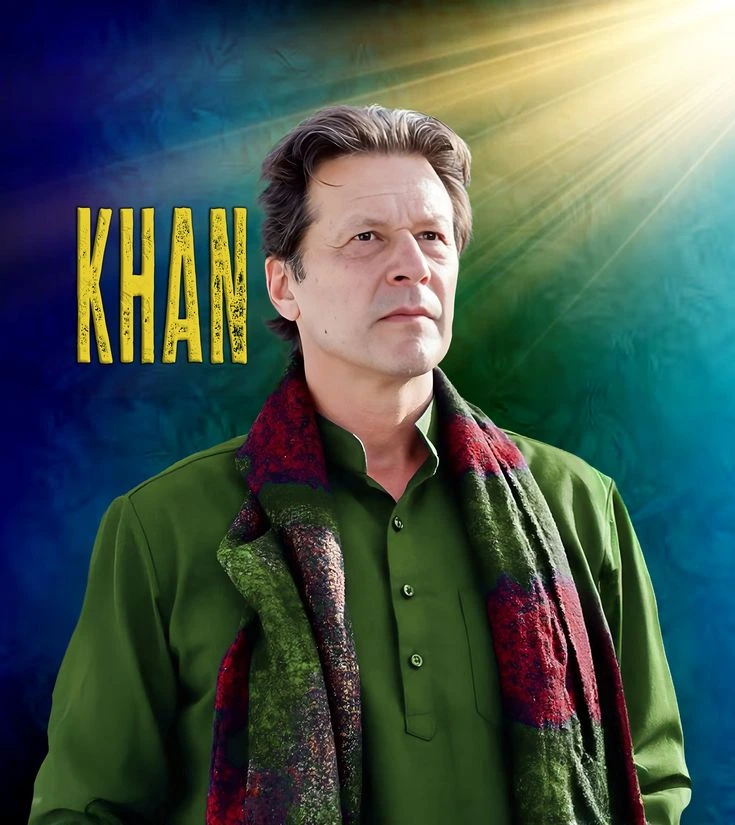
Fake ARY News Graphic About Imran Khan’s Release — How Pakistan’s Fake News Machine Struck Again

Introduction
In an age where a single screenshot can reach hundreds of thousands of people within hours, the line between real news and fabricated content has never been more dangerously thin. Pakistan, with its highly charged political environment and deeply divided social media landscape, has become one of the most fertile grounds for misinformation to grow and spread at an alarming speed.
The latest example came in mid-May 2026, when a viral image began circulating on X (formerly Twitter) that appeared to show a breaking news bulletin from ARY News. The graphic claimed that Interior Minister Rana Sanaullah had announced that former Prime Minister Imran Khan would be released from prison this week on humanitarian grounds. Within hours, the image had racked up hundreds of thousands of views, sparked heated debates, and given false hope to millions of Imran Khan’s supporters across the country.
There was just one problem — none of it was true.
A thorough fact-check by iVerify Pakistan, later carried by Express Tribune, confirmed that the image was entirely fabricated. ARY News never aired such a bulletin. Sanaullah never made those remarks. And Imran Khan’s release was not, and is not, imminent.
How the Fake Image Spread
The viral graphic first appeared on X on May 13, 2026. It was styled to look exactly like an ARY News on-air broadcast, complete with the channel’s branding, ticker bars, and Urdu breaking news labels. The image attributed a statement to Interior Minister Sanaullah, suggesting that the government was preparing to free the former prime minister on compassionate grounds.
Several accounts that appeared to be sympathetic to Pakistan Tehreek-e-Insaf (PTI) were among the first to share the image. One account posted it with the caption: “Imran Khan is going to be released this week. Is this true??” — a question that, on its own, signals uncertainty, yet the post still attracted over 129,500 views. Another user shared the same graphic asking, “Can anyone confirm this news?” and received more than 112,400 views on that single post alone.
From there, the image snowballed. Multiple other accounts picked it up, added their own captions, and sent it further into the social media ecosystem. By the time any serious fact-checking had begun, the fake bulletin had already been seen by hundreds of thousands of people, many of whom had no reason to question it at first glance.
This is how misinformation works in 2026 — it moves fast, exploits emotion, and by the time the truth catches up, the damage is already done.
The Fact-Checking Process
Given the enormous public interest in Imran Khan’s imprisonment and the persistent speculation about a possible release from Adiala Jail, iVerify Pakistan launched a verification process to determine whether the image was genuine.
The first step was a basic keyword search. Researchers looked for any reports by ARY News or any other credible Pakistani or international news outlet confirming that Sanaullah had made such a statement. The search came up completely empty. No such report existed anywhere — not on ARY’s website, not on their social media, not in any news wire or press release.
Investigators then checked the official social media accounts of PTI’s leadership, the party’s own platforms, and statements from Imran Khan’s family members. Again, nothing. No one connected to PTI had confirmed or even mentioned this supposed announcement, which would have been extraordinary news if it were real.
With no supporting evidence from any credible source, attention turned to the image itself.
Visual and Technical Red Flags
A closer examination of the image revealed several telling inconsistencies that pointed clearly toward digital manipulation.
Blurred and distorted edges: The area around Sanaullah’s ears appeared unnaturally blurred and distorted — a common artifact that appears when someone is digitally inserted or removed from an image, or when elements are clumsily pasted together.
Wrong shade of yellow: The yellow color used for the Urdu breaking news ticker at the bottom of the screen was noticeably darker than the standard shade ARY News uses in its actual on-air graphics. This kind of color mismatch is easy to miss at a glance but becomes obvious under scrutiny.
Low-resolution branding: The LIVE bug and the ARY NEWS logo positioned in the lower-right corner of the screen appeared blurry and significantly lower in resolution compared to the rest of the image. This strongly suggests that the logo was lifted from another source and pasted onto the fabricated graphic, rather than being an authentic part of a genuine broadcast.
Missing red ticker line: ARY News always displays a single red line above its English ticker bar — it is a consistent, signature element of their on-screen design. That red line was completely absent from the viral image, a critical detail that immediately flags the graphic as fake to anyone familiar with the channel’s actual broadcast format.
When the image was run through Fake Image Detector, a forensic tool used to identify digitally manipulated or AI-generated visuals, the result was unambiguous — the tool classified the image as 100 percent “computer-generated or modified.”
ARY News Officially Denies the Bulletin
When iVerify Pakistan reached out to ARY News directly, the channel’s Head of Assignment, Fayyaz Hyder Mangi, rejected the claim without hesitation.
He confirmed that ARY News had never broadcast such a bulletin and called the image false information designed to mislead viewers. He also pointed to the missing red ticker line as a technical giveaway, noting that this absent element alone was sufficient proof that the graphic had been created using ARY’s visual identity and color scheme to deceive the public — not taken from any actual broadcast.
The channel’s denial was unequivocal. There was no ambiguity, no “we cannot confirm or deny.” ARY News said plainly: this is fake, we did not air this, and this was created to mislead people.
Background: Why This Topic Is So Explosive
To understand why a fake graphic like this can go viral so quickly, it helps to understand the context surrounding Imran Khan’s imprisonment.
Imran Khan has been held at Rawalpindi’s Adiala Jail since 2023, when he was convicted for concealing details of gifts received through the state treasury, known as the Toshakhana case. He is also serving a 14-year sentence in the £190 million Al-Qadir Trust corruption case. His party and family have repeatedly claimed that he has been kept in solitary confinement and that restrictions have been placed on visitors wishing to meet him.
In January 2026, reports emerged that Imran Khan had developed a serious eye ailment, raising further concerns about his medical condition and the quality of care he was receiving in prison. His two sons, Kasim Khan and Sulaiman Khan, have been actively campaigning internationally for their father’s release, drawing attention from human rights organizations around the world.
With such a charged backdrop, any news — real or fake — about Imran Khan’s potential release becomes instant fuel for social media. His supporters are emotionally invested and deeply hopeful. This makes them, unfortunately, exactly the kind of audience that misinformation targets most effectively.
The Bigger Problem: Pakistan’s Fake News Epidemic
This incident is not an isolated one. Pakistan has seen a steady and troubling rise in politically motivated fake news, particularly on social media platforms. In fact, Imran Khan himself has previously fallen victim to sharing inaccurate information on his social media accounts, highlighting just how pervasive the problem has become — even those at the center of the news cycle are not immune.
Fake news in Pakistan tends to follow a familiar pattern. A sensitive or emotionally loaded topic is identified — a natural disaster, a political development, a famous person’s health. A fabricated image or video is created, often using real media branding to lend it credibility. It is then seeded into politically aligned accounts or WhatsApp groups where it spreads through networks of people who trust one another and are unlikely to question content that confirms their existing beliefs.
The speed of social media amplification means that by the time a fact-check is published, the false information has already reached a vastly larger audience than the correction ever will. This asymmetry is one of the most damaging features of the modern misinformation landscape.
How to Spot Fake News: Practical Tips
The ARY News graphic case offers a clear lesson in what to look for when evaluating the authenticity of viral media content.
Check the original source directly: Before sharing or believing any breaking news, visit the official website or verified social media accounts of the channel or outlet being cited. If ARY News reportedly aired a bulletin, check ARY’s own website and Twitter page. If nothing is there, the claim is almost certainly false.
Look for visual inconsistencies: Examine images carefully. Are logos or text elements blurry compared to the rest of the image? Are colors slightly off? Are there distortions around faces or objects? These are signs of digital manipulation.
Cross-reference with multiple outlets: Major news events are always covered by more than one outlet. If only one screenshot is circulating and no established newspaper, TV channel, or wire service has reported the same story, treat it with extreme skepticism.
Control your emotional response: Fake news is deliberately designed to trigger strong emotions — hope, outrage, fear, or excitement. If a piece of content makes you feel a sudden surge of emotion, take a breath and verify before sharing. The stronger the emotional reaction, the more carefully you should scrutinize the source.
Use fact-checking tools: Organizations like iVerify Pakistan exist specifically to debunk viral misinformation. Reverse image search tools and AI-detection software like Fake Image Detector are freely available and easy to use.
The Responsibility of Media Houses and Platforms
This case also raises important questions about accountability. When a media outlet’s branding is repeatedly used to spread false information, what steps should that outlet take to protect its identity and its audience?
ARY News responded promptly and clearly in this instance, which is commendable. But media organizations across Pakistan need to go further — running regular public awareness campaigns about what their on-air graphics actually look like, publishing official statements whenever fake graphics appear in their name, and working with digital platforms to have fabricated content removed quickly.
Social media platforms also bear responsibility. X, WhatsApp, and Facebook have all been criticized for the speed with which dangerous misinformation spreads on their networks. While these platforms have rolled out various fact-checking and content moderation measures in recent years, the reality on the ground in Pakistan suggests that much more needs to be done, particularly in Urdu-language content moderation.
The government, too, has a role to play. Legislation against deliberate disinformation exists in Pakistan but enforcement remains inconsistent. Creating and distributing fabricated media content that impersonates legitimate news organizations should carry real legal consequences.
Conclusion
The fake ARY News graphic claiming Imran Khan’s imminent release is, at its core, a cautionary tale about what happens when political passion collides with social media and a lack of media literacy. It spread not because people are gullible, but because the image was professionally crafted, the topic was emotionally loaded, and the platforms on which it spread are designed to reward engagement over accuracy.
The fact-checkers at iVerify Pakistan did their job well. The visual irregularities were identified, the forensic analysis was conducted, ARY News was contacted, and the verdict was clear: the image was fake, the bulletin never aired, and the announcement never happened.
Imran Khan’s legal situation will be resolved in courtrooms, not in viral screenshots. Until then, every Pakistani social media user carries a small but meaningful responsibility — to pause, to question, and to verify before hitting that share button.
Because in the end, every time we share something without checking, we become part of the problem. And every time we stop to verify, we become part of the solution.