
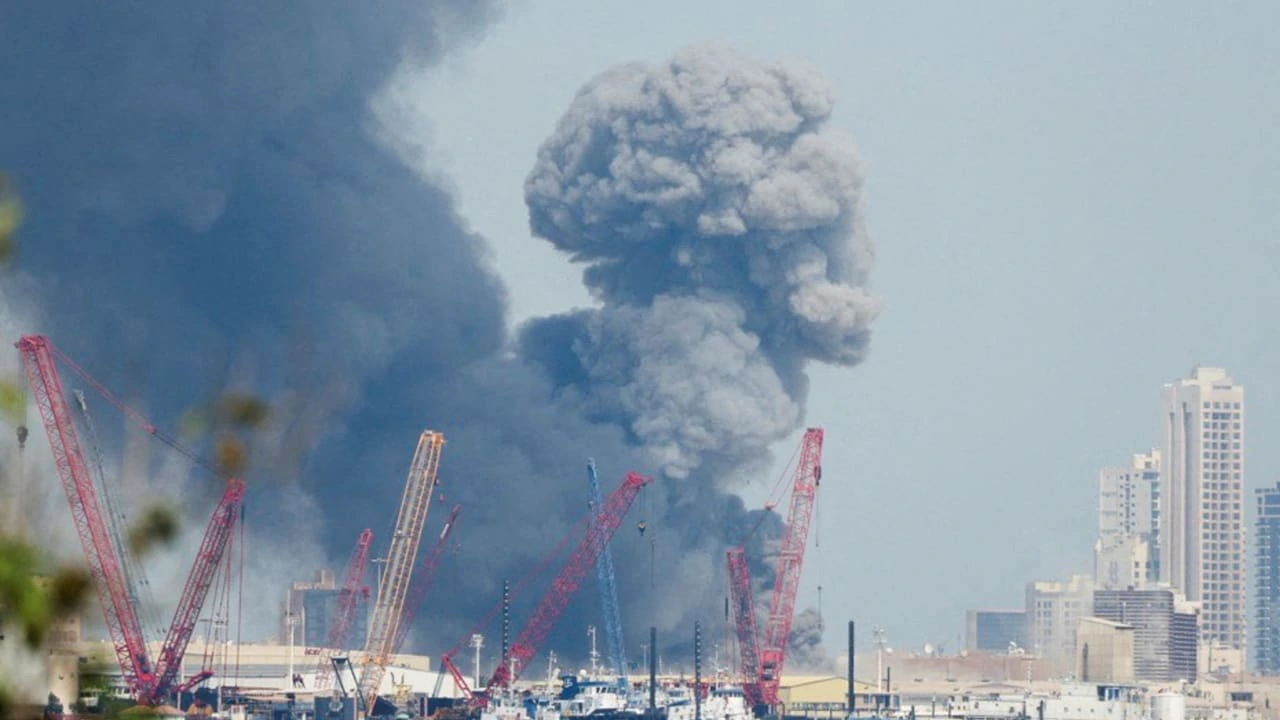
Iran’s IRGC Launches Retaliatory Strike on US Base — Kuwait Intercepts Missiles and Drones

The Situation at a Glance
Iran’s Islamic Revolutionary Guard Corps (IRGC) launched a retaliatory military strike against a US-linked base on Monday, June 1, 2026, escalating an already fragile security situation in the Middle East. The strike came hours after American forces targeted an Iranian communications tower on Sirik Island in Hormozgan Province — and the fallout was swift.
What the IRGC Said
The IRGC’s Aerospace Force confirmed the strike in an official statement carried by Iran’s semi-official Fars news agency:
The airbase from which the aggression originated was targeted, and the predicted targets were destroyed.
The IRGC framed the operation as a direct and proportionate response to what it described as unprovoked American aggression on Iranian soil.
Kuwait Caught in the Crossfire
Kuwait — which hosts US military forces — found itself directly in the line of fire. State news agency KUNA reported that air defense systems successfully intercepted incoming Iranian missiles and drones, as sirens rang out across the country.
Kuwait’s Ministry of Foreign Affairs wasted no time issuing a sharp condemnation, warning that repeated acts of aggression undermine regional de-escalation efforts and threaten stability across the Gulf.
The US Side of the Story
US Central Command (CENTCOM) acknowledged its earlier strikes on Iran, stating that American fighter jets responded to what it called “aggressive Iranian actions” — including the shootdown of a US MQ-1 drone flying over international waters.
CENTCOM said it destroyed Iranian air defenses, a ground control station, and two one-way attack drones. No US personnel were reported killed or injured.
A Ceasefire Hanging by a Thread
These exchanges are happening against the backdrop of fragile indirect negotiations between Washington and Tehran. A ceasefire, which took effect in April, has been holding — but barely.
Both sides are reportedly reviewing a Memorandum of Understanding (MoU) that would:
- Extend the ceasefire by 60 days
- Guarantee unrestricted shipping through the Strait of Hormuz
- Require Iran to remove all sea mines within 30 days
- Include Iran’s commitment to not pursue nuclear weapons
- Open talks on Iran’s uranium enrichment program and disposal of highly enriched uranium stockpiles
However, reports from the New York Times suggest Trump has since “toughened the terms,” while Axios reported the president requested several amendments to the preliminary agreement his envoys had already reached with Iranian officials.
Trump: “Iran Really Wants to Make a Deal”
Speaking on Truth Social late Sunday, President Trump expressed optimism, saying Iran “really wants to make a deal” and that the final agreement would be “good” for the United States and its allies. He brushed off domestic critics, telling them to “sit back and relax.”
Notably, he made no mention of the US strikes on Iran.
Iran Warns of “Mistrust” Slowing Talks
Iran’s Foreign Ministry spokesperson Esmaeil Baghaei acknowledged that negotiations are moving slowly — and placed the blame squarely on Washington’s shifting demands and Israel’s continued military actions in Lebanon.
The other party is constantly changing its views and putting forward new or contradictory demands.
Foreign Minister Abbas Araghchi told IRNA that while dialogue is ongoing, nothing should be taken seriously until a definitive conclusion is reached — calling current media reports “speculation.”
Why This Matters
The US-Iran conflict has already disrupted global shipping through the Strait of Hormuz, one of the world’s most critical oil transit routes. Every exchange of fire, even with a ceasefire nominally in place, raises the risk of the situation spiraling out of control — with consequences felt far beyond the Middle East.
The coming days will be critical. Either the MoU gets signed and buys both sides 60 more days to negotiate, or the tit-for-tat military exchanges push the region back toward full-scale conflict.